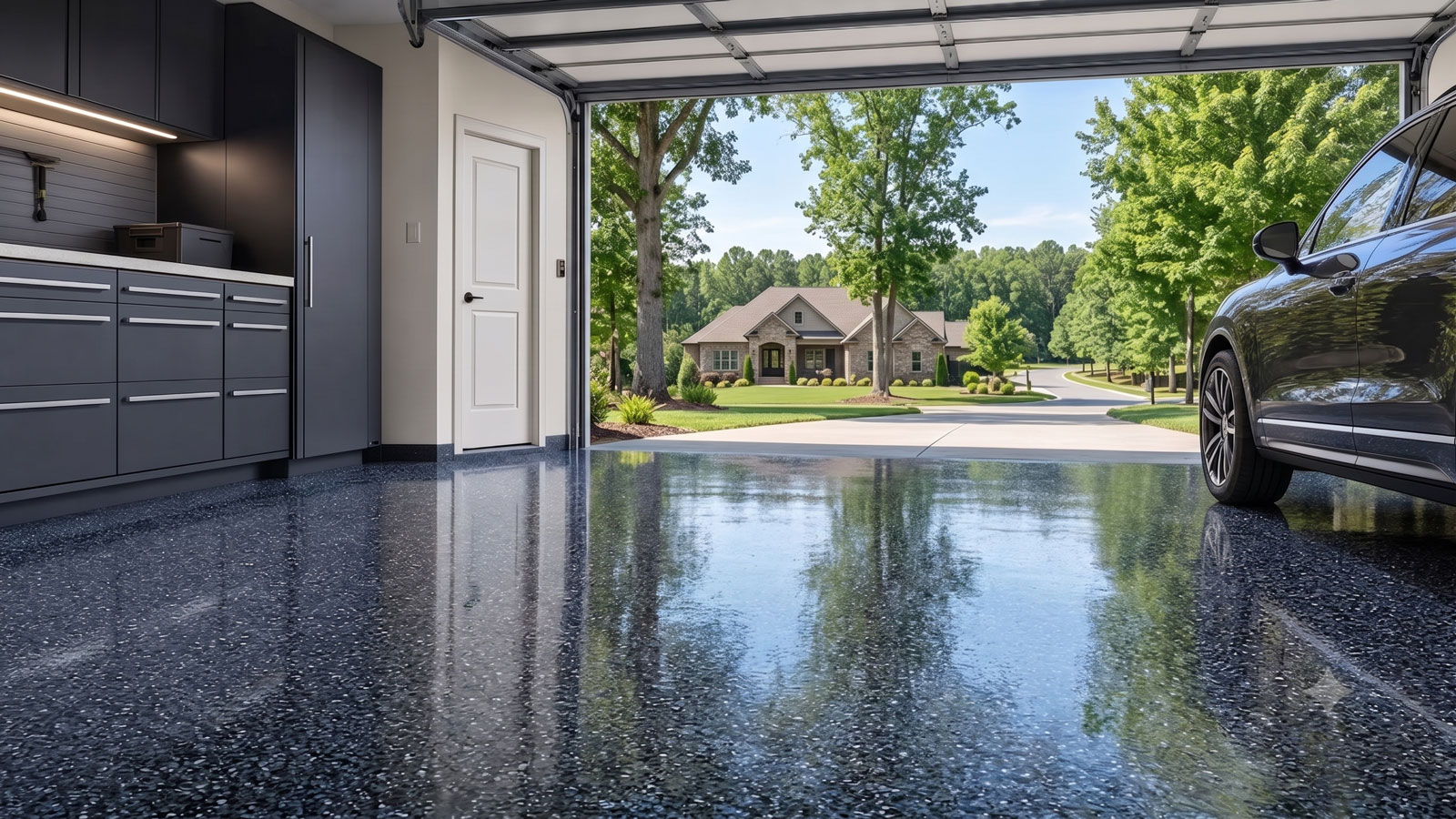
Garage Floor Coating in Burlington, NC
Floor Coating Services in Burlington, NC
Burlington grew from railroad and textile roots into a larger Alamance County city with mature neighborhoods, industrial-era properties, postwar suburbs, and newer residential expansion. That history produces a wide range of garage and utility-floor conditions across the service area. For garage-floor work, that local development pattern matters because older Burlington garages can have oil, coatings, repairs, and utility-use wear, while newer residential slabs often center on builder treatments and joint detail. The age of the home alone is not enough to predict the condition or preparation needs of the slab.
The Haw River and its tributaries are the defining regional drainage system east of Greensboro. Older neighborhoods and newer growth areas can route runoff very differently depending on street grade, lot slope, and stormwater infrastructure. That makes drainage a legitimate local inspection topic, but not a blanket moisture diagnosis. Driveway grade, downspout discharge, threshold entry, persistent dampness, and previous coating failure are the evidence that should change the project.
The coating plan should follow the actual slab: old coatings or repairs where present, builder treatments on newer concrete, and any real threshold-water issue observed at the property.
Local Market Insight
Burlington combines historic Burlington, Haw River, and Alamance County. Those local conditions create real differences in slab age, drainage, access, and garage use, so the project should be based on the property rather than a generic metro-wide assumption.
What Affects the Cost of Garage Floor Coating in Burlington?
Burlington project scope can vary with old coating removal, builder-applied surface treatments, cracks and repairs, drainage at the threshold, older residential lots, detached garages, newer multi-bay floors, and storage can all add staging and perimeter work., and parking, workshops, lawn equipment, household storage, and daily entry can drive different traction and durability priorities.. Two equal-size garages can require very different preparation when their concrete histories and site conditions differ.
- Existing coatings and surface history: Established floors can require coating removal, oil cleanup, crack and patch repair, and treatment of weak or altered concrete. The estimate should identify what material must be removed and whether later repairs, repours, or transitions create more than one preparation condition.
- Newer concrete and builder treatments: Newer slabs can still carry curing compounds, sealers, dense finishes, and builder patches requiring mechanical profiling. Mechanical preparation should reach a suitable concrete surface rather than simply roughening an incompatible sealer, curing product, or weak surface layer.
- Local drainage and threshold water: The Haw River and its tributaries are the defining regional drainage system east of Greensboro. Actual driveway runoff, downspouts, threshold entry, damp edges, and prior coating failure should determine whether drainage correction belongs in the project.
- Cracks, joints, and repairs: Stable cracks, patched areas, utility cuts, and control joints should be evaluated individually. The scope should distinguish repair work from joints or movement that may require a different treatment.
- Access and garage geometry: Older residential lots, detached garages, newer multi-bay floors, and storage can all add staging and perimeter work. Steps, stem walls, cabinets, storage edges, drains, and perimeter grinding can add meaningful labor beyond the main open-floor square footage.
- Daily use and seasonal exposure: Parking, workshops, lawn equipment, household storage, and daily entry can drive different traction and durability priorities. Humid weather, thunderstorms, clay, pollen, and seasonal debris create routine cleaning demands. Traction, cleanability, cure timing, and maintenance expectations should reflect how the garage is actually used after the slab is properly prepared.
Call for a clear, project-specific estimate — or request one online.
Local Garage-Floor Conditions in Burlington
Read the Burlington slab itself first: old coating edges, patches, texture changes, joints, contamination, and later pours reveal the preparation work more reliably than house age.
Check drainage separately. Haw River provides context, but driveway pitch, downspouts, threshold water, persistent dampness, and prior coating failure are the property-level evidence that matters.
Burlington Garage Ages, Slab History, and Surface Preparation
Burlington grew from railroad and textile roots into a larger Alamance County city with mature neighborhoods, industrial-era properties, postwar suburbs, and newer residential expansion. That history produces a wide range of garage and utility-floor conditions across the service area. That timeline helps explain why garages within the same service area can come from very different construction periods. older Burlington garages can have oil, coatings, repairs, and utility-use wear, while newer residential slabs often center on builder treatments and joint detail.
Established floors can require coating removal, oil cleanup, crack and patch repair, and treatment of weak or altered concrete. Older or altered concrete can still be a strong coating candidate, but previous paint, clear sealers, oil, patch compounds, weak repairs, and mixed pours need to be exposed and evaluated before the new system is installed.
Newer slabs can still carry curing compounds, sealers, dense finishes, and builder patches requiring mechanical profiling. A newer-looking slab can therefore require substantial grinding even when it has little visible deterioration. A strong estimate explains removal, profiling, repairs, joint treatment, and edge work in concrete terms rather than relying on neighborhood age.
Burlington Drainage, Runoff, and Garage-Level Water Evidence
The Haw River and its tributaries are the defining regional drainage system east of Greensboro. Older neighborhoods and newer growth areas can route runoff very differently depending on street grade, lot slope, and stormwater infrastructure. That broader local water context is useful because it explains why runoff can differ from one property to the next, but the garage decision still needs direct evidence at the threshold and on the slab.
Watch a heavy rain or seasonal thaw when possible. Note whether the driveway sheds water away, whether downspouts concentrate flow near the apron, whether water crosses the door, and whether damp edges or mineral deposits remain after surrounding concrete dries. Those observations are more actionable than a broad watershed label.
Humid weather, thunderstorms, clay, pollen, and seasonal debris create routine cleaning demands. Normal wet-vehicle use should remain separate from recurring exterior water entry. A coating can improve cleanup and appearance, but it cannot repair grade or redirect runoff. The best project scope treats drainage correction, concrete preparation, traction, and finish selection as separate decisions.
Burlington Garage Floor Coating FAQs
Why can two Burlington garages need very different preparation?
Garage age, repairs, coatings, and builder treatments can differ even nearby. The actual slab should determine removal, grinding, repair, and joint work. during on-site evaluation.
Does being near Haw River automatically mean a garage needs moisture treatment?
No. Haw River is drainage context, not a slab diagnosis. Actual threshold water, persistent dampness, mineral deposits, and prior coating failure are the useful evidence. during on-site evaluation.
Can a newer Burlington garage still need aggressive grinding?
Yes. Curing compounds, sealers, dense finishes, and builder repairs can interfere with adhesion even on clean-looking concrete, so mechanical profiling still matters. during on-site evaluation.
What site details can add labor in Burlington?
Access, steps, storage, joints, repairs, perimeter edges, and staging can add labor beyond open floor square footage, especially on altered or larger garages. during on-site evaluation.
How should garage use affect the finish?
Match traction, cleanability, and cure timing to real parking, storage, workshop, or family-entry use after the slab has been properly prepared. during on-site evaluation.
Burlington Neighborhoods & Local Context
Phone Quote Line
Speak with a floor coating specialist about your project and get a realistic estimate range.
(336) 644-3199Typical Project Cost
$3,000–$5,500
Typical range for a two-car garage. Final pricing depends on floor size, concrete condition, prep work, coating type, and finish options.
Helpful Guides